



Introduction
The King Charles Spaniel is one of the oldest toy breeds in the world, with a history tracing back to the royal courts of 15th-century Europe. Despite sharing part of its name with the far more popular Cavalier King Charles Spaniel, this is a genuinely distinct breed, smaller, rarer, and with its own unique look and temperament.
This guide covers the King Charles Spaniel’s history, physical traits, temperament, and health needs, along with a clear breakdown of how it differs from its more famous cousin.
What Is a King Charles Spaniel?
The King Charles Spaniel, known as the English Toy Spaniel in the United States, is a small companion dog breed with a documented history dating back to the 15th century. The breed takes its name from King Charles II of England, an enthusiastic fancier of small spaniels during the 17th century, though its royal associations stretch back even further to the Stuart monarchy.
In 1903, the UK’s Kennel Club combined four previously separate toy spaniel varieties, the King Charles, Blenheim, Ruby, and Prince Charles Spaniels, into a single breed under the King Charles Spaniel name, with each original variety contributing one of the four coat colors still recognized today.

Quick Facts Table
| Detail | Information |
|---|---|
| Also Known As | English Toy Spaniel |
| Origin | England |
| Height | 9–11 inches (23–28 cm) |
| Weight | 8–14 pounds (3.6–6.4 kg) |
| Lifespan | Around 10–12 years |
| AKC Recognition | 1886 |
| Coat Colors | King Charles, Prince Charles, Blenheim, Ruby |
King Charles Spaniel vs. Cavalier King Charles Spaniel
One of the most common points of confusion for prospective owners is the difference between the King Charles Spaniel and the much more widely known Cavalier King Charles Spaniel. While they share a common ancestry, they have been recognized as entirely separate breeds for roughly a century, each with distinct breed standards.

Key Differences
- Size: The King Charles Spaniel is smaller, typically weighing 8 to 14 pounds, compared to the Cavalier’s 13 to 18 pounds
- Skull shape: The King Charles Spaniel has a domed skull, while the Cavalier has a flatter skull
- Muzzle: The King Charles Spaniel has a shorter, more pushed-in face, while the Cavalier has a longer muzzle
- Popularity: The Cavalier is significantly more common; in the mid-2000s, Cavalier litter registrations with the AKC outnumbered King Charles Spaniel litters by more than 25 to 1
How the Two Breeds Diverged
Both breeds descend from the same small spaniels historically favored by British royalty. In the 1920s, an American fancier named Roswell Eldridge offered a cash prize at Crufts for dogs resembling the older, longer-nosed spaniels seen in 17th-century paintings, rather than the flatter-faced dogs that had become fashionable by the Victorian era. This effort eventually led to the recognition of the Cavalier King Charles Spaniel as a distinct breed in 1945, while the shorter-muzzled, domed-skull dogs retained the King Charles Spaniel name.
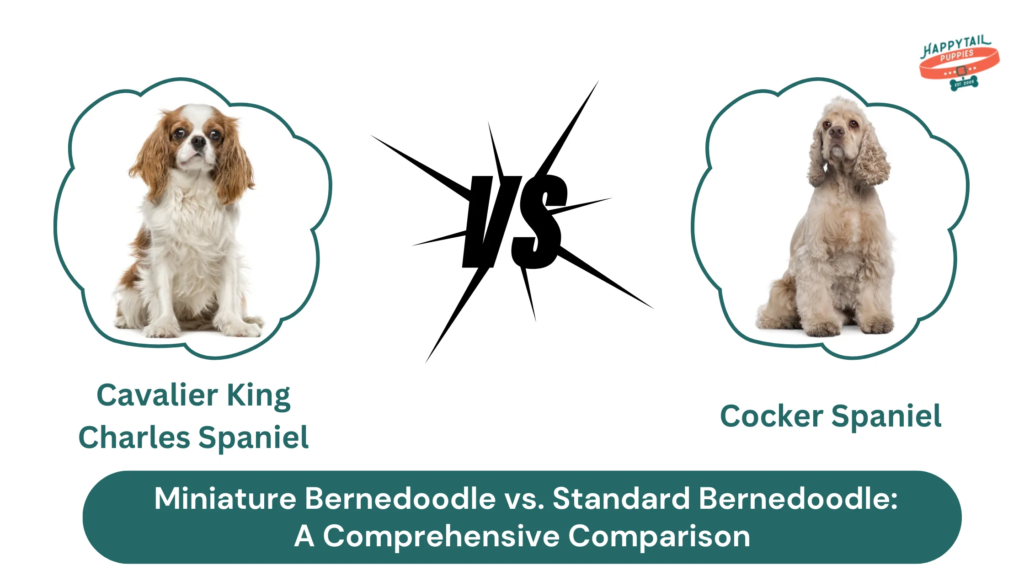
Comparison Table
| Feature | King Charles Spaniel | Cavalier King Charles Spaniel |
|---|---|---|
| Weight | 8–14 lbs | 13–18 lbs |
| Skull | Domed | Flat |
| Muzzle | Short, pushed-in | Longer |
| AKC Recognition | 1886 | 1995 |
| Popularity (US) | Rare | Very popular |
King Charles Spaniel Temperament
The King Charles Spaniel is known for its devoted, affectionate nature. Historically valued as a companion for European and English royalty, the breed has always been bred primarily for companionship rather than fieldwork, unlike many other spaniel breeds developed for hunting.
Key temperament traits include:
- Deeply affectionate and people-oriented, often described as a “velcro dog” that prefers staying close to its owner
- Calm and low-maintenance in energy needs, making it well-suited to apartment living
- Gentle and amenable, generally getting along well with familiar people and other pets
- Prone to separation anxiety, given its strong attachment to its owners
Because of this strong need for companionship, the King Charles Spaniel tends to do best in households where it won’t be left alone for long stretches on a regular basis.
Physical Characteristics
The King Charles Spaniel has a compact, square-shaped body with a distinctive silky, long coat that may be straight or slightly wavy, with feathering on the ears, chest, and body. Its round eyes, full cheeks, and long, fringed ears give it an especially soft, endearing expression.
Recognized Coat Colors
- King Charles: Black and tan
- Prince Charles: White with black and tan patches (tricolor)
- Blenheim: White with red patches
- Ruby: Solid red
Health Considerations
Like many toy breeds with distinctive facial structures, the King Charles Spaniel is prone to certain health conditions that prospective owners should understand before bringing one home.
Common Health Concerns
- Heart valve disease, including mitral valve issues, which can be serious and requires regular veterinary monitoring
- Patent ductus arteriosus, a congenital heart condition affecting blood flow
- Eye conditions, given the breed’s prominent, round eyes
- Breathing-related issues, linked to its shorter muzzle structure
Working With a Responsible Breeder
Given these known health predispositions, it’s especially important to work with a breeder who screens for hereditary conditions and can answer detailed questions about the health history of a puppy’s parents. Reputable breeders are typically affiliated with recognized national breed clubs and follow established health-testing protocols.
Health Snapshot Table
| Condition | What to Watch For |
|---|---|
| Heart valve disease | Regular veterinary heart checks recommended |
| Patent ductus arteriosus | Congenital; typically identified early by a vet |
| Eye conditions | Routine eye exams recommended |
| Breathing sensitivity | Avoid overheating and excessive strenuous exercise |
Caring for a King Charles Spaniel
Grooming
The breed’s long, silky coat requires regular brushing, typically several times a week, to prevent matting, particularly around the ears and feathered areas.
Exercise
While the King Charles Spaniel doesn’t require intense exercise, regular short walks and playtime help maintain a healthy weight and support its overall wellbeing.
Companionship Needs
Given its strong attachment to its owners, the breed does best with consistent companionship and may struggle if regularly left alone for extended periods.
Why the King Charles Spaniel Remains a Beloved Companion Breed
Despite being far less common than its Cavalier cousin, the King Charles Spaniel continues to hold a devoted following for several reasons:
- A rich, centuries-long royal history, connecting it directly to English monarchy
- A gentle, deeply affectionate temperament, well-suited to companionship-focused households
- A distinctive, endearing appearance, shaped by centuries of selective breeding
- A manageable size and low exercise needs, making it adaptable to various living situations
FAQs About the King Charles Spaniel
1. Is the King Charles Spaniel the same as the Cavalier King Charles Spaniel? No, they are two separate breeds with different breed standards, though they share a common ancestry. The King Charles Spaniel is smaller and has a domed skull and shorter muzzle compared to the Cavalier.
2. What is the King Charles Spaniel called in the United States? In the U.S., the breed is officially known as the English Toy Spaniel, while “King Charles” refers specifically to its black-and-tan color variety in American breed terminology.
3. Is the King Charles Spniel a good family dog? Yes, the breed is known for its gentle, affectionate temperament, though its strong need for companionship makes it best suited to households where it won’t be left alone often.
4. What health problems are common in King Charles Spniels? The breed is prone to heart valve conditions, congenital heart issues like patent ductus arteriosus, and certain eye conditions, making regular veterinary checkups important.
5. How big does a King Charles Spniel get? Adults typically stand 9 to 11 inches tall and weigh between 8 and 14 pounds, making it one of the smaller toy spaniel breeds.
Conclusion
The King Charles Spniel offers a rare combination of centuries-old royal heritage and genuine, devoted companionship, all in a small, manageable package. While often confused with the more popular Cavalier King Charles Spniel, this distinct breed has its own unique charm, appearance, and temperament worth understanding on its own terms.
For anyone seeking an affectionate, low-energy companion with a truly storied history, the King Charles Spniel remains a wonderful, if increasingly rare, choice.

