



Introduction
Few companies trace their origins to a single job loss quite like Bloomberg. What began with a $10 million severance check in 1981 has grown into one of the most influential financial data and media companies in the world, powering trading desks, newsrooms, and boardrooms across the globe. As Bloomberg LP navigates a significant leadership transition in 2026, its story remains one of the most remarkable in modern business history.
This guide covers Bloomberg’s history, its core businesses, and the developments shaping the company today.
Quick Facts About Bloomberg
| Detail | Information |
|---|---|
| Full Name | Bloomberg L.P. |
| Founded | October 1, 1981 |
| Founders | Michael Bloomberg, Thomas Secunda, Duncan MacMillan, Charles Zegar |
| Headquarters | Midtown Manhattan, New York City |
| Industry | Financial data, software, and media |
| Annual Revenue | Approximately $15 billion (2024) |
| Employees | Around 26,000 |
| Offices Worldwide | 176 (as of 2025) |
| Current CEO | Vlad Kliatchko |
| Majority Owner | Michael Bloomberg (88%) |
How Bloomberg Began
Bloomberg‘s origin story starts with a career setback. Michael Bloomberg joined Wall Street investment bank Salomon Brothers in 1966 as a trading room clerk, working his way up over 15 years to become a general partner overseeing the firm’s block trading and equity operations. When Salomon Brothers was acquired by Phibro Corporation in 1981, Bloomberg was let go, receiving a $10 million buyout for his partnership stake.
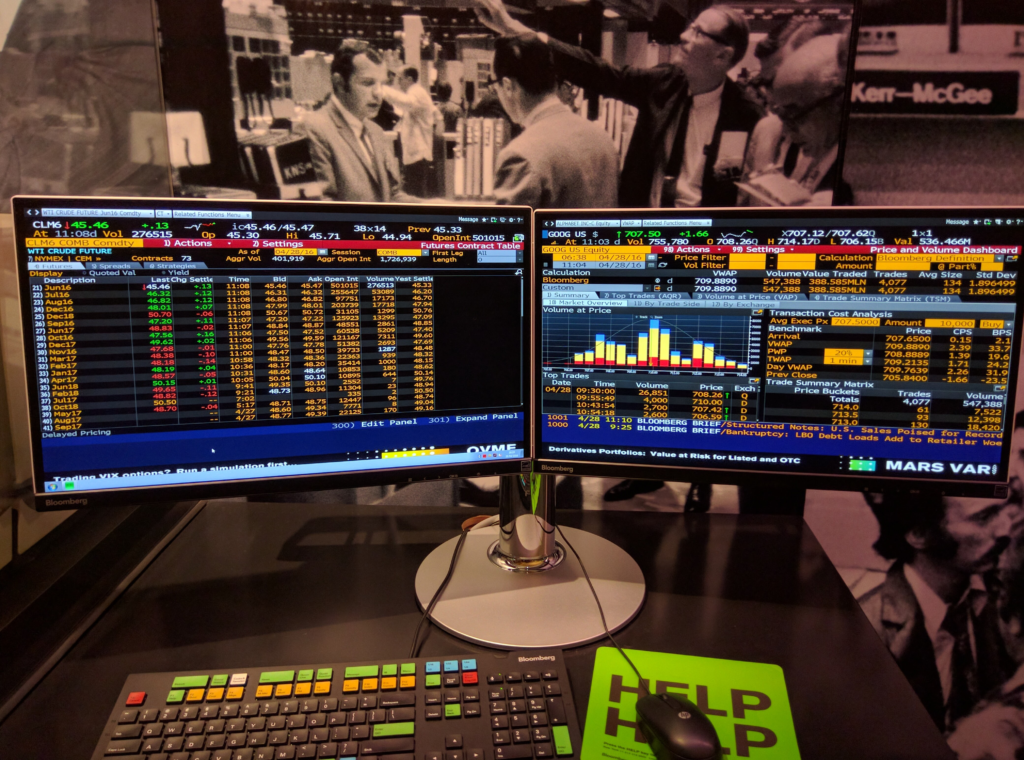
Rather than starting over elsewhere on Wall Street, Bloomberg used that payout to found Innovative Market Systems alongside partners Thomas Secunda, Duncan MacMillan, and Charles Zegar. The company’s mission was straightforward but ambitious: build a computer system that could deliver real-time financial market data directly to Wall Street trading desks.
Building the Bloomberg Terminal
Early Growth and Key Investment
The company’s flagship product, the Bloomberg Terminal, tracked financial market information and helped calculate the pricing of financial instruments, a genuinely novel offering at the time. In 1984, investment bank Merrill Lynch invested $30 million into the company, providing crucial early capital and validation. The company was renamed Bloomberg LP in 1986, and by 1991, roughly 10,000 terminals had been installed on finance professionals’ desks worldwide.
A Growing Financial Empire
Bloomberg LP bought back a third of Merrill Lynch’s stake in 1996 for $200 million, before Michael Bloomberg’s personal holding company acquired Merrill’s remaining stake in 2008 for a reported $4.43 billion, consolidating control of the company almost entirely under Bloomberg himself.

Today, the Bloomberg Terminal remains central to the company’s business, serving over 300,000 subscribers globally and charging approximately $2,000 per month per terminal, making it one of the most valuable and entrenched products in financial technology.
Bloomberg Growth Timeline Table
| Year | Milestone |
|---|---|
| 1981 | Michael Bloomberg founds Innovative Market Systems |
| 1984 | Merrill Lynch invests $30 million |
| 1986 | Company renamed Bloomberg LP |
| 1990 | Bloomberg News launches |
| 1991 | 10,000 terminals installed worldwide |
| 1996 | Bloomberg buys back one-third of Merrill’s stake |
| 2008 | Bloomberg acquires Merrill’s remaining stake (~$4.43 billion) |
| 2024 | Annual revenue reaches approximately $15 billion |
Bloomberg’s Media Business
Beyond its core terminal business, Blomberg expanded into full-scale media operations starting in 1990 with the launch of Boomberg News. The company’s media holdings have since grown to include Blomberg Television, Blomberg Radio (including New York’s WBBR), Blomberg Businessweek, and a wide-reaching digital news operation covering markets, politics, and technology around the world.
Blomberg News has built a reputation for driving competition among business newswires, delivering fast, detailed financial and economic reporting to investors and professionals globally.
Michael Bloomberg’s Path Through Politics and Back
Michael Boomberg’s career has moved between business and public service more than once. He served as Mayor of New York City for three terms, from 2002 to 2013, stepping back from day-to-day leadership of Blomberg LP during that period. After leaving City Hall, he returned to lead the company again, serving as CEO from 2014 to 2023.
He later made an unsuccessful bid for the Democratic presidential nomination in the 2020 election. Throughout his career, Blomberg has also become one of the world’s most significant philanthropists, having donated more than $21 billion over his lifetime to causes including gun safety, climate change, education, and public health, including $3.7 billion given in 2024 alone.
Bloomberg’s Leadership Transition
A New Generation Takes Over
In 2023, Michael Blomberg stepped back from the CEO role, appointing product head Vlad Kliatchko as Blomberg LP’s new Chief Executive Officer. Around the same time, the company professionalized its board of directors, moving away from the small circle of personal advisers who had guided the company for two decades and bringing in figures including Netflix co-founder Reed Hastings and veteran banker Bob Steel.
Former Bank of England governor Mark Carney was initially named non-executive chair of this new board, though the position has remained vacant since Carney departed to successfully run for Prime Minister of Canada in early 2025.
Continued Evolution in 2026
Reporting from mid-2026 indicates Blomberg LP continues actively shaping its “post-Mike” leadership structure, reflecting the company’s ongoing transition as it moves further from being defined primarily by its founder’s day-to-day involvement. Michael Blomberg has committed to eventually donating his 88% ownership stake in the company to Blomberg Philanthropies.
Legal and Regulatory Challenges
Like many major global news and financial organizations, Blomberg has faced legal challenges tied to its journalism. In July 2026, a Singapore court ordered Blomberg to pay government ministers approximately $356,000 in a defamation case, highlighting the legal complexities international news organizations can face when reporting across different countries’ media and defamation laws.
Why Bloomberg Remains a Dominant Force in Finance and Media
Several factors continue to define the company’s outsized influence:
- The Blomberg Terminal’s continued dominance, remaining deeply embedded in global financial trading infrastructure
- A diversified media operation, spanning news, television, radio, and digital publishing
- Massive scale, with roughly 26,000 employees and operations across 176 offices worldwide
- A significant leadership transition, as the company evolves beyond its founder’s direct daily involvement
- Sustained profitability, reflected in its approximately $15 billion in annual revenue
FAQs About Bloomberg
1. Who founded Blomberg? Michael Blomberg founded the company in 1981 alongside Thomas Secunda, Duncan MacMillan, and Charles Zegar, originally under the name Innovative Market Systems.
2. What is the Blomberg Terminal? It’s Blomberg’s flagship financial data and analytics product, used by more than 300,000 subscribers worldwide to access real-time market information, news, and trading tools.
3. Who is Blomberg’s current CEO? Vlad Kliatchko has served as CEO of Blomberg LP since 2023, succeeding Michael Blomberg.
4. Does Michael Blomberg still own Blomberg LP? Yes, he remains the majority owner with an 88% stake, though he has committed to eventually donating his ownership to Blomberg Philanthropies.
5. What businesses does Blomberg operate besides the Terminal? Blomberg also operates Blomberg News, Blomberg Television, Blomberg Radio, and Blomberg Businessweek, alongside its core financial data and analytics services.
Conclusion
Blomberg’s journey from a single job loss on Wall Street to a $15 billion global financial data and media empire remains one of the most remarkable business stories of the past half-century. As the company continues navigating its leadership transition beyond Michael Blomberg’s direct involvement, its core strengths, the dominant Blomberg Terminal and a far-reaching media operation, continue to shape how the world accesses financial information.
With a new generation of leadership now steering the company through 2026 and beyond, Bloomerg’s next chapter looks set to build on more than four decades of influence in global finance and media.

