



Introduction
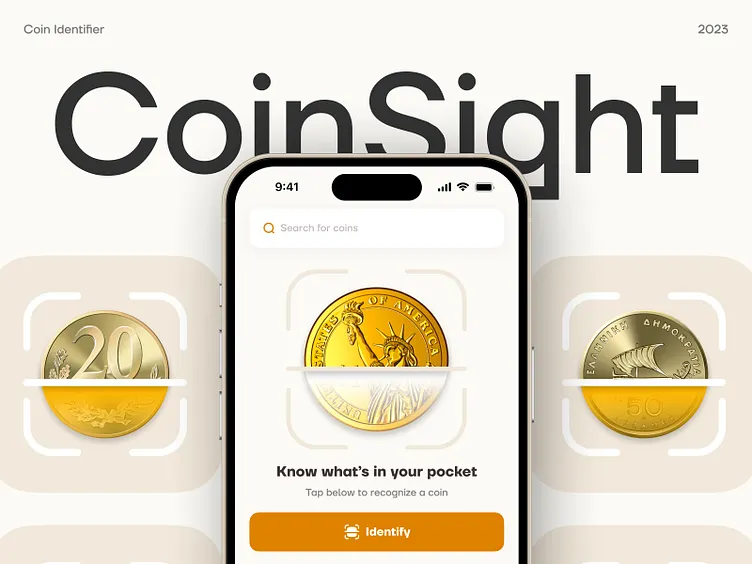
That old coin sitting in a drawer, jar, or inherited collection could be worth face value, or it could be worth hundreds of dollars. A coin identifier takes the guesswork out of figuring out which one it is, using either AI-powered photo recognition or traditional reference methods to pinpoint a coin’s origin, mint year, and estimated value in seconds.
This guide covers how coin identifiers work, the best apps available in 2026, and how to combine digital tools with traditional identification methods for the most accurate results.
What Is a Coin Identifier?
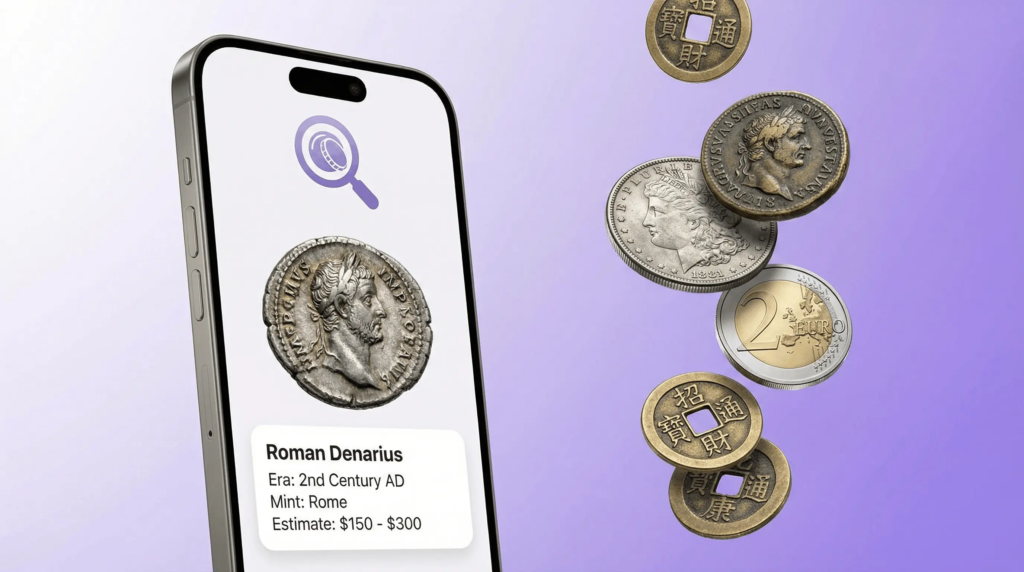
A coin identifier is a tool, typically a mobile app or website, that helps you determine a coin’s country of origin, denomination, mint year, mint mark, and estimated market value. Modern coin identifiers primarily rely on AI-powered image recognition: you photograph both sides of a coin, and the app compares it against a large database to find a match.
Quick Facts Table
| Detail | Information |
|---|---|
| How It Works | AI photo recognition compared against a coin database |
| What You Get | Country, denomination, mint year, mint mark, estimated value |
| Coverage | Ranges from US-only to 300,000+ global coin types |
| Typical Accuracy | Around 95–99%, depending on photo quality and app |
| Cost | Most offer free basic identification with paid premium features |
How AI Coin Identification Actually Works
Coin identifier apps use image recognition technology trained on large databases of coin images. When you photograph a coin, the app analyzes visual details, design elements, lettering, portraits, dates, and mint marks, and compares them against its reference database to find the closest match.
The best results generally come from photographing both the obverse (front) and reverse (back) of a coin in good lighting, since mint marks and fine details can be small and easy for an algorithm to miss in a blurry or poorly lit photo.
Popular Coin Identifier Apps in 2026
General AI-Powered Identifier Apps
Several apps focus on broad, easy-to-use coin identification for casual collectors and curious beginners:
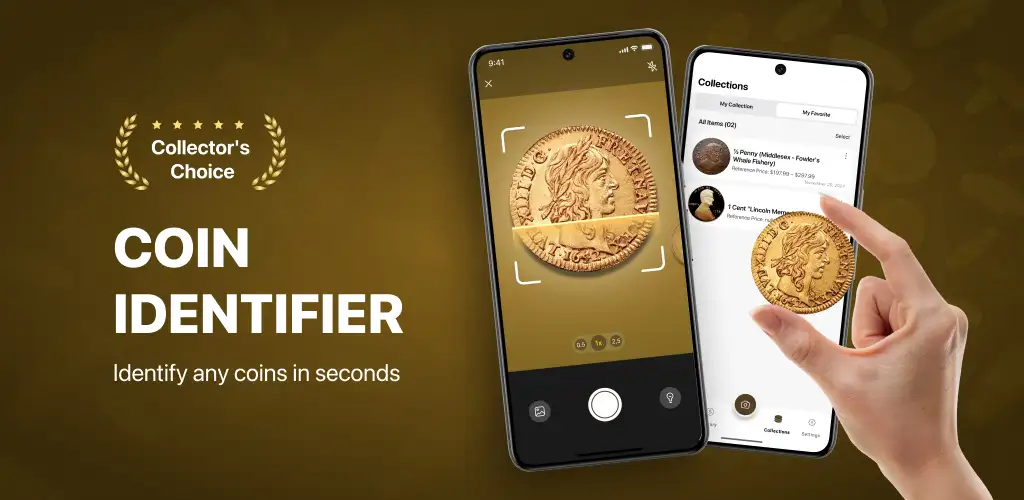
- CoinSnap: Covers over 300,000 coin types worldwide, offering identification, rarity levels, and price estimates from a single photo
- Coinoscope: A free, straightforward identifier that shows a list of visually similar coins along with a collection-management feature
- Coin ID Scanner: Identifies coins by photographing both sides, providing country, denomination, composition, and historical background
Apps Focused on US Coin Valuation and Grading
For collectors specifically focused on US coins, error detection, and grading accuracy, more specialized apps have emerged that combine AI identification with market pricing data pulled from auction houses and sold listings. These tools often include features like:
- Automatic error and variety detection
- Grading estimates based on standard numismatic scales
- Pricing aggregated from multiple sources, including recent sold listings
PCGS CoinFacts: The Free Reference Standard
For US coins specifically, PCGS CoinFacts remains one of the most trusted free reference resources, maintained by the Professional Coin Grading Service, a well-established third-party grading authority. Rather than relying purely on AI photo matching, it offers a detailed encyclopedia-style reference covering tens of thousands of US coin types, useful for verifying results from an AI-based identifier app.
App Comparison Table
| App Type | Best For | Notable Feature |
|---|---|---|
| CoinSnap | Broad, global coin identification | 300,000+ coin types covered |
| Coinoscope | Free, casual identification | Simple photo-match interface |
| Coin ID Scanner | Historical and compositional detail | Obverse/reverse dual-photo scanning |
| PCGS CoinFacts | US coin reference and verification | Free, professionally maintained database |
Traditional Ways to Identify Coins Without an App
While AI coin identifiers are convenient, traditional identification methods remain valuable, especially for verifying an app’s results or working with coins in poor condition.
Check the Basics First
- Country of origin: Look for country name or national symbols
- Denomination: Usually printed clearly on one side
- Date and mint mark: Often a small letter near the date indicating which mint produced the coin
- Composition: Weight, color, and edge markings can hint at metal content
Use Reference Books and Catalogs
Numismatic reference catalogs remain a trusted method for serious collectors, particularly for older or foreign coins that AI databases may not cover as thoroughly. These catalogs typically organize coins by country, era, and denomination, with photographs for visual comparison.
Consult a Local Coin Dealer
For coins that seem potentially valuable or difficult to identify, a local coin dealer or numismatic society can offer expert, in-person verification, something no app can fully replace, especially for grading condition accurately.
Understanding Coin Value Beyond Identification
Identifying a coin is only the first step, understanding its value requires a bit more context:
- Rarity: Limited mintage years or discontinued designs often carry higher value
- Condition (grade): Coins are typically graded on a numeric scale reflecting wear and preservation
- Errors and varieties: Minting mistakes, like doubled dies or off-center strikes, can significantly increase value
- Market demand: Even genuinely rare coins fluctuate in value based on collector interest and current market trends
A coin identifier app can give you a starting estimate, but for potentially valuable coins, getting a professional grading opinion is worth the investment before selling.
Tips for Getting Accurate Coin Identification Results
- Use good lighting and avoid glare when photographing your coin
- Photograph both sides, since mint marks and details often appear on the reverse
- Clean coins carefully, if at all, since improper cleaning can actually reduce a coin’s value
- Cross-check results across more than one app or reference source, especially for coins that seem potentially valuable
- Get a professional opinion before selling any coin that identifies as rare or high-value
Why Coin Identifier Tools Have Become So Popular
Several factors explain the growing popularity of these tools:
- Accessibility for beginners, removing the need for deep numismatic expertise to get started
- Instant curiosity-satisfying results, ideal for anyone who’s inherited or found old coins
- Genuine value discovery, occasionally uncovering coins worth significantly more than face value
- A bridge to deeper collecting, often introducing casual users to the broader hobby of numismatics
FAQs About Coin Identifiers
1. How accurate are coin identifier apps? Most modern AI-powered coin identifier apps report accuracy rates between 95% and 99%, though results depend heavily on photo quality and lighting.
2. Are coin identifier apps free to use? Many offer free basic identification, with premium features like detailed grading, error detection, or expanded pricing data typically available through a paid subscription.
3. Can a coin identifier app replace professional grading? No, apps provide a helpful starting estimate, but professional grading services offer more reliable, standardized condition assessments, especially important before selling a potentially valuable coin.
4. What’s the best way to photograph a coin for identification? Use good, even lighting, avoid glare, and photograph both the front (obverse) and back (reverse) of the coin for the most accurate results.
5. Do coin identifier apps work on foreign or ancient coins? Many do, though coverage varies by app. Some specialize in US coins specifically, while others maintain databases covering hundreds of thousands of coin types worldwide.
Conclusion
A good coin identifier can turn a mysterious old coin into a clear answer in seconds, whether you’re satisfying simple curiosity or hoping to uncover a genuinely valuable find. By combining AI-powered apps with traditional reference methods and, when needed, professional grading, you can confidently identify and value coins with far more accuracy than guesswork alone.
The next time you find an unfamiliar coin in a drawer or inherited collection, a quick photo could be the first step toward discovering its real story, and its real worth.

