




Introduction
Kemi Badenoch took over the Conservative Party at one of its lowest points in modern history, following its worst general election defeat since 1832. Nearly two years into her leadership, she continues working to rebuild the party’s fortunes amid a rapidly shifting and unpredictable British political landscape.
This article covers her background, her path to the Conservative leadership, and where things stand for her and the party in 2026.
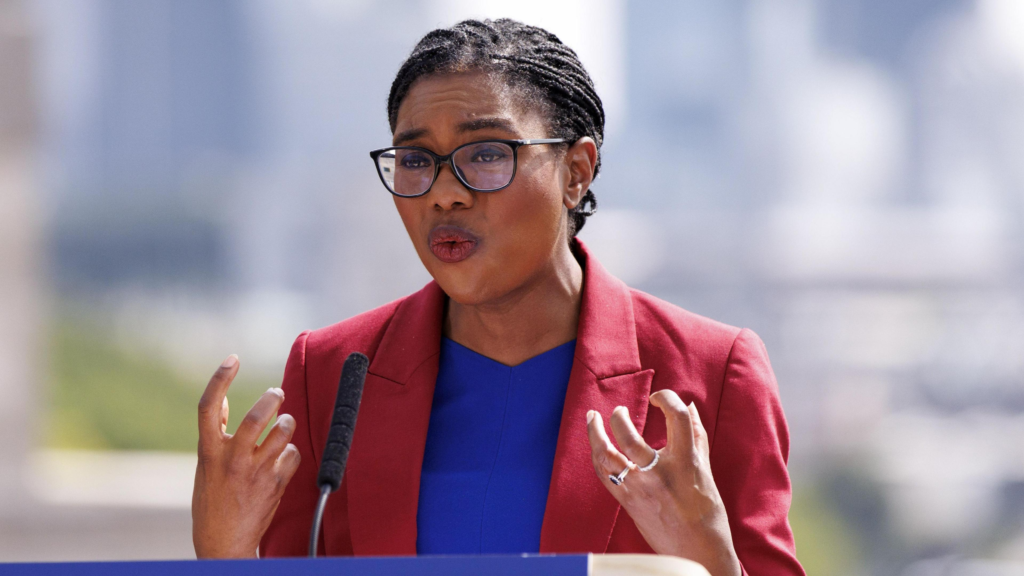
Who Is Kemi Badenoch?
Kemi Badenoch is a British politician who has served as Leader of the Conservative Party since November 2024, making her the first Black woman to lead a major UK political party. Born on January 2, 1980, in Wimbledon, London, to Nigerian parents, she has built a reputation as a blunt, outspoken parliamentarian known for her critiques of identity politics.
As Conservative leader, she also serves as Leader of the Opposition, positioning her as the primary political counterweight to the sitting government.
Quick Facts Table
| Detail | Information |
|---|---|
| Full Name | Kemi Badenoch |
| Date of Birth | January 2, 1980 |
| Birthplace | Wimbledon, London, England |
| Party | Conservative Party |
| Current Role | Leader of the Conservative Party; Leader of the Opposition |
| Became Leader | November 2, 2024 |
| Spouse | Hamish Badenoch |
| Children | Three |
Early Life and Background
Kemi Badenoch was born in London to parents of Nigerian origin, her father a physician and her mother a physiology professor. She has two siblings and spent part of her early life in Nigeria and the United States before returning to the UK as a teenager. Before entering politics, she trained and worked as a software engineer, an unusual professional background among senior UK political figures.
Kemi Badenoch’s Path to the Conservative Leadership
Early Political Career
Badenoch joined the Conservative Party in 2005. Her first attempt to enter Parliament came in 2010, when she ran for the Dulwich and West Norwood constituency and finished third. She returned to frontline politics in 2015, winning a seat on the London Assembly, before being elected as a Member of Parliament in the 2016 general election.
Rising Through Government
Kemi Badenoch‘s cabinet career began in 2022, when then-Prime Minister Liz Truss appointed her International Trade Secretary. She retained her position when Rishi Sunak became prime minister weeks later, and went on to also serve as Minister for Women and Equalities and later as Business and Trade Secretary.
Winning the Conservative Leadership
Following the Conservative Party’s historic defeat in the July 2024 general election, which reduced its parliamentary seats from 372 to just 121, then-leader Rishi Sunak announced his resignation. A leadership contest followed, narrowing an initial field of six candidates down to Badenoch and former immigration minister Robert Jenrick.
On November 2, 2024, Badenoch won the final membership vote with 53,806 votes (56.5%) to Jenrick’s 41,388, becoming the party’s new leader after a contest lasting more than three months.
Career Timeline Table
| Year | Milestone |
|---|---|
| 2005 | Joins the Conservative Party |
| 2010 | Loses first parliamentary bid (Dulwich and West Norwood) |
| 2015 | Elected to the London Assembly |
| 2016 | Elected as Member of Parliament |
| 2022 | Appointed International Trade Secretary |
| November 2024 | Elected Conservative Party leader |
Leading the Conservatives Through Rebuilding
Navigating a Difficult Political Landscape
Since taking over as leader, Badenoch has faced the challenge of rebuilding a party still recovering from its historic 2024 defeat, while also contending with the rise of Reform UK, a right-wing populist party that has drawn support away from traditional Conservative voters. Reports throughout 2026 have noted that the Conservative vote has faced pressure from multiple directions simultaneously, complicating any straightforward recovery strategy.
Facing Internal Pressure
Badenoch’s leadership faced notable internal scrutiny at various points, with speculation about potential challenges from within her own party, including from Robert Jenrick, her former leadership rival. Despite this, reporting from mid-2026 suggested she had impressed some of her parliamentary colleagues in recent months, even amid difficult local election results for the party.
Outlining Her Vision
In a July 2026 interview, Badenoch described the Conservative Party as “more united than ever before,” arguing it remained the only party with a genuine plan to get Britain “working” again. She pointed to recent political developments as evidence that the party was beginning to recover from its 2024 defeat, while outlining her priorities on the economy, defence, and immigration ahead of any future election.
Political Positions and Public Profile
Badenoch has built a reputation as a vocal critic of what she describes as “woke” ideology and identity politics, positioning herself as a straight-talking figure willing to challenge prevailing political and cultural narratives. She has been a supporter of Brexit and previously backed the Rwanda deportation scheme championed during the Sunak government.
Her direct communication style has drawn both strong support from parts of the party base and criticism from political opponents, who have at times characterized her positioning as pulling the Conservative Party further to the right.
Personal Life
Kemi Badenoch is married to Hamish Badenoch, a former Conservative councilor and banker, and the couple has three children together.
Why Kemi Badenoch Remains a Significant Political Figure
Several factors continue to define her importance within British politics:
- A historic leadership role, as the first Black woman to lead a major UK political party
- A challenging rebuilding task, leading the Conservatives back from their worst-ever electoral defeat
- A distinctive political voice, known for directness on cultural and economic issues
- Navigating a fragmented political landscape, particularly amid the rise of Reform UK
FAQs About Kemi Badenoch
1. When did Kemi Badenoch become Conservative Party leader? She was elected leader on November 2, 2024, defeating Robert Jenrick in the final membership vote.
2. What did Kemi Badenoch do before politics? She trained and worked as a software engineer before entering politics, joining the Conservative Party in 2005.
3. Is Kemi Badenoch the first Black woman to lead a major UK party? Yes, she is the first Black woman to lead a major political party in the United Kingdom.
4. What government roles has Kemi Badenoch held? She has served as International Trade Secretary, Minister for Women and Equalities, and Business and Trade Secretary.
5. How is Kemi Badenoch performing as Conservative leader in 2026? Reports throughout 2026 describe a mixed picture, with the party facing pressure from Reform UK, though some coverage notes she has impressed parliamentary colleagues despite difficult local election results.
Conclusion
Kemi Badenoch’s leadership of the Conservative Party represents both a historic milestone and a genuinely difficult political challenge, taking charge of a party rebuilding from its worst general election defeat in nearly two centuries. As she works to reposition the Conservatives amid a fragmented and rapidly shifting political landscape, her direct leadership style continues to draw both support and scrutiny.
As British politics continues to evolve through 2026, Kemi Badenoch’s ability to navigate the pressures facing her party will remain one of the most closely watched storylines in UK politics.

