




Introduction
Newsweek has survived nearly a century of change in the media industry, moving through several owners, a near-collapse of its print business, and a complete reinvention as a digital-first news organization. Understanding its history helps explain how one of America’s “big three” newsweeklies still reaches tens of millions of readers today.
This article explores Newsweek’s founding, its ownership history, and where the publication stands in 2026.
What Is Newsweek?
Newsweek is an American weekly news magazine and digital media organization based in New York City. Founded in 1933, it covers international news, politics, business, technology, and culture through both online and select print editions.

Today, Newsweek reaches roughly 100 million people each month across its digital platforms, making it one of the most widely read English-language news brands in the world.
Quick Facts Table
| Detail | Information |
|---|---|
| Founded | February 17, 1933 |
| Founder | Thomas J.C. Martyn |
| Headquarters | New York City, USA |
| Current Owners | Dev Pragad and Johnathan Davis (50% each) |
| Parent Entity | Newsweek Publishing LLC |
| Monthly Reach | Approximately 100 million users |
| Editor-in-Chief | Jennifer H. Cunningham |
The Founding of Newsweek
Newsweek was launched as News-Week on February 17, 1933, by Thomas J.C. Martyn, a former foreign news editor at Time magazine. Martyn secured financial backing from a group of investors, including Ward Cheney, John Hay Whitney, and Paul Mellon, son of Andrew W. Mellon, raising approximately $2.5 million to launch the publication.
The first issue featured seven photographs summarizing the week’s major news events, and journalist Samuel T. Williamson served as the magazine’s first editor-in-chief. In 1937, News-Week merged with the weekly journal Today, dropping the hyphen from its name to become simply Newsweek.
Newsweek’s Ownership History
The Washington Post Era
In 1961, Washington Post publisher Philip L. Graham purchased Newsweek, ushering in one of the magazine’s most influential periods. Under Washington Post ownership, Newsweek adopted a more politically engaged editorial approach and expanded its cultural coverage, becoming known for narrative-style journalism that helped it stand out from rivals like Time.
At its peak, Newsweek reached an international circulation of more than four million readers, publishing multiple international editions in languages including Japanese, Korean, and Spanish.
Decline and the Sale to Sidney Harman
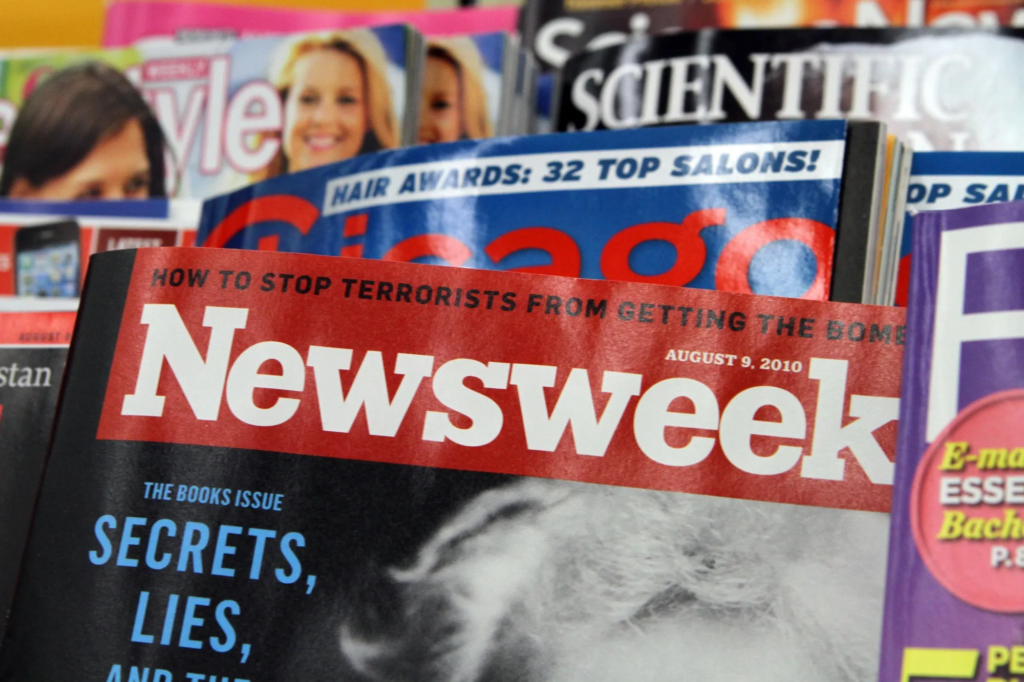
By the 2000s, print advertising revenue had declined sharply across the magazine industry. In August 2010, the Washington Post Company sold Newsweek to businessman Sidney Harman, founder of Harman Kardon, for a symbolic $1 plus the assumption of the magazine’s liabilities.
Later that year, Newsweek merged with the news website The Daily Beast, forming the Newsweek Daily Beast Company under editor-in-chief Tina Brown. Despite the merger, financial pressures continued, and Newsweek ended its original print run with its December 31, 2012, issue, transitioning to an all-digital format known as Newsweek Global.
Ownership Timeline Table
| Period | Owner |
|---|---|
| 1933–1961 | Independent, founded by Thomas J.C. Martyn |
| 1961–2010 | The Washington Post Company |
| 2010–2013 | Sidney Harman / Newsweek Daily Beast Company |
| 2013–2018 | IBT Media |
| 2018–Present | Newsweek Publishing LLC (Dev Pragad and Johnathan Davis) |
The IBT Media Years and Legal Troubles
In 2013, Newsweek was sold to IBT Media, ending its partnership with The Daily Beast. IBT Media invested roughly $47 million into the brand between 2013 and 2018, funding a print relaunch in March 2014 along with technology and infrastructure upgrades.
This period was also marked by significant controversy. In January 2018, Newsweek’s offices were raided by the Manhattan District Attorney’s office as part of an investigation into IBT Media co-founder Etienne Uzac, who later pleaded guilty to fraud and money laundering charges in 2020. Several Newsweek journalists were reportedly fired after reporting on the investigation, a period former staff members have described as damaging to the publication’s editorial reputation.
Newsweek’s Digital Reinvention
In September 2018, following internal restructuring, IBT Media spun off Newsweek into its own independent entity, Newswek Publishing LLC, co-owned by Dev Pragad and Johnathan Davis. Pragad, who took on the role of President and CEO, focused on rebuilding the business around digital traffic and diversified revenue streams.
Under this new structure, Newswek’s annual revenue grew significantly, from around $20 million at a loss in 2018 to approximately $90 million by 2024, with profit margins reportedly holding above 20% since 2022. Much of this growth came from digital advertising, along with newer revenue streams including ranking programs and content syndication.
Business Growth Table
| Metric | 2018 | 2024–2025 |
|---|---|---|
| Annual Revenue | ~$20 million (at a loss) | ~$90 million |
| Profit Margin | Negative | 20%+ |
| Monthly Digital Reach | Not specified | ~100 million users |
| Estimated Company Valuation | Not specified | Over $300 million |
Who Owns Newsweek Today?
As of 2026, Newswek is privately owned by Dev Pragad and Johnathan Davis, who each hold an equal 50% stake in Newswek Publishing LLC. Pragad serves as President and CEO, taking an active role in day-to-day operations, while Davis holds an equal ownership stake with governance rights but a less active management role.
In June 2025, Newswek expanded its business further by acquiring Adprime, a healthcare-focused ad-technology firm, reflecting continued diversification beyond traditional advertising revenue.
In July 2026, a New York appellate court awarded Newswek nearly $11 million in a legal dispute with its former owner, IBT Media, related to payroll tax obligations, closing out one chapter of the publication’s complicated ownership history.
Newsweek’s Editorial Reputation
Newswek’s editorial credibility has faced scrutiny at various points since its ownership changes began in 2013. Some former staff members have publicly criticized the publication’s editorial standards during the IBT Media era, citing inaccurate stories and increased clickbait-style content.
That said, independent media rating organizations have offered more measured assessments in recent years. As of 2026, evaluators including AllSides, Media Bias/Fact Check, and Ad Fontes Media generally classify Newswek as a factual, if occasionally sensationalized, news source, with none rating it as unreliable.
Why Newsweek Remains a Notable Media Brand
Several factors help explain Newswek’s continued relevance in the media landscape:
- A nearly century-long publishing history, spanning multiple eras of American journalism
- A significant digital-first transformation, rebuilding its business model around online readership
- Diversified revenue streams, reducing reliance on traditional print advertising
- Continued global reach, with tens of millions of monthly readers across digital platforms
FAQs About Newsweek
1. When was Newswek founded? Newswek was founded on February 17, 1933, by Thomas J.C. Martyn as News-Week.
2. Who owns Newswek now? Newswek is privately owned by Dev Pragad and Johnathan Davis, who each hold a 50% stake in Newswek Publishing LLC.
3. Did Newswek stop printing? Newswek ended its original print run in December 2012, moved to an all-digital format, and later relaunched a print edition in March 2014 under IBT Media.
4. What happened during Newswek’s IBT Media ownership? IBT Media owned Newswek from 2013 to 2018, a period marked by both business investment and a legal investigation into co-founder Etienne Uzac, who later pleaded guilty to fraud.
5. Is Newswek considered a reliable news source? As of 2026, independent media rating organizations generally classify Newswek as factual, though some note occasional sensationalism in its coverage.
Conclusion
Newswek’s history reflects the broader story of American print journalism adapting to survive in a rapidly changing media landscape. From its founding in 1933 through ownership changes, financial struggles, and a significant digital reinvention, the publication has continually restructured itself to stay relevant.
As Newswek continues expanding its digital reach and diversifying its business under its current ownership, it remains one of the most recognized news brands with a legacy stretching back nearly a century.

