



Introduction
The zero waste lifestyle has shifted from a niche movement into a genuinely mainstream way of living. With new plastic bans taking effect in several regions and growing awareness around landfill overflow, more people are looking for practical, realistic ways to reduce their waste in 2026.
This guide breaks down what a zero waste lifestyle actually means, the core principles behind it, and simple, beginner-friendly steps to get started, without the pressure of doing it perfectly.
What Is a Zero Waste Lifestyle?
A zero waste lifestyle is a philosophy and set of practices aimed at minimizing the amount of trash sent to landfills, incinerators, and oceans. Rather than following a traditional “use and throw away” approach, it promotes a more circular system, where resources are reused, recycled, or composted rather than discarded.
It’s important to understand that a completely waste-free life is nearly impossible given the systems most of us live within. The goal isn’t perfection, it’s progress through consistent, intentional choices.
As zero waste author Anne Marie Bonneau has put it, the movement doesn’t need a small number of people practicing it perfectly. It needs millions of people practicing it imperfectly.
The 5 Rs of Zero Waste Living
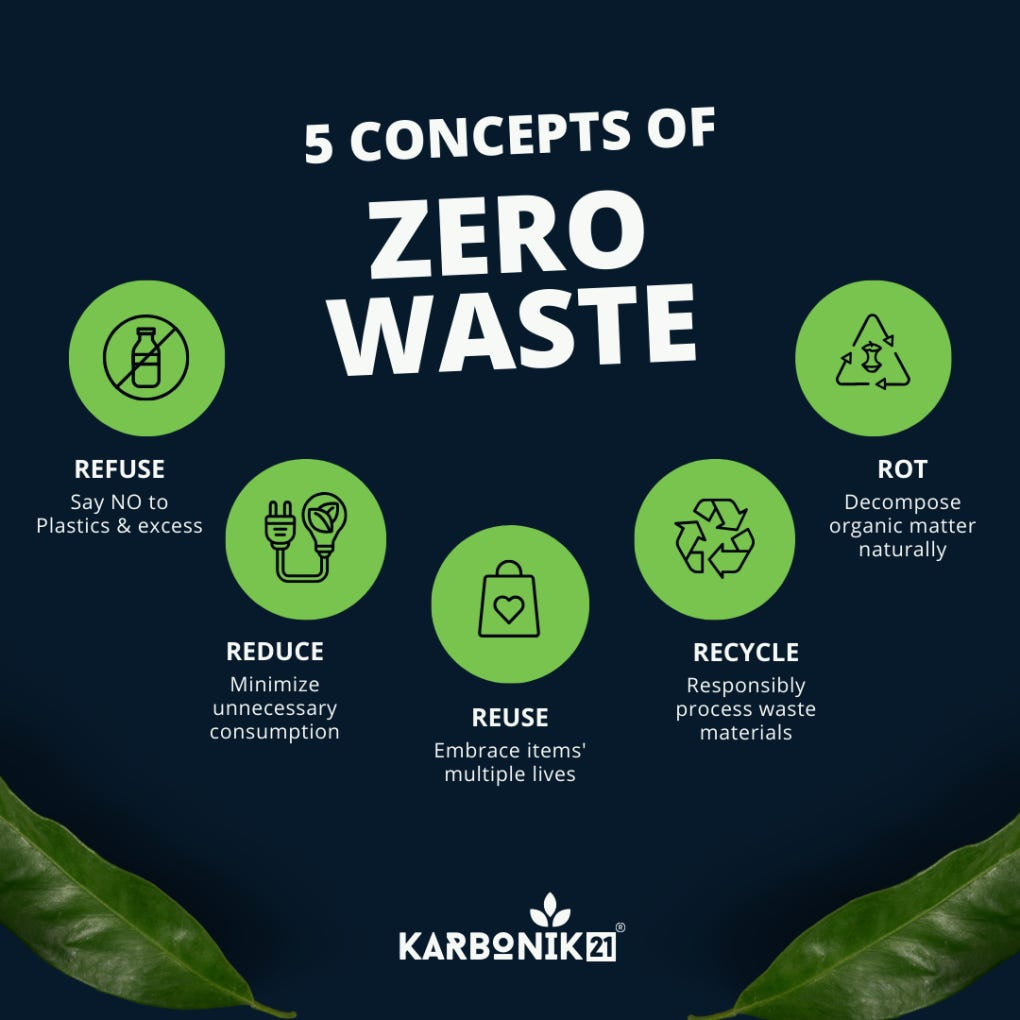
The zero waste lifestyle movement is built around five core principles, often referred to as the 5 Rs. Applying them in order helps prioritize the most effective actions first.
Refuse
Refuse what you don’t need. This means saying no to freebies, unnecessary packaging, and single-use items before they even enter your home.
Reduce
Reduce what you do use. This involves being more intentional about consumption, buying only what you genuinely need rather than accumulating extra.
Reuse
Reuse what you can. Instead of discarding items after a single use, look for ways to repurpose them, glass jars for storage, old clothing as cleaning rags, and so on.
Recycle
Recycle what you can’t refuse, reduce, or reuse. Recycling comes after the other steps because it still requires energy and resources to process.
Rot (Compost)
Rot, or compost, the organic waste that remains. Composting food scraps and other organic material diverts a significant amount of waste from landfills, where it would otherwise contribute to methane emissions.
The 5 Rs Table
| Principle | What It Means | Example |
|---|---|---|
| Refuse | Say no to unnecessary items | Declining free promotional items |
| Reduce | Buy and use less overall | Choosing quality over quantity |
| Reuse | Repurpose instead of discarding | Using glass jars for storage |
| Recycle | Process what can’t be reused | Sorting recyclables correctly |
| Rot | Compost organic waste | Composting food scraps |
Why Zero Waste Living Matters in 2026
Zero Waste Lifestyle production continues to climb, with international reports warning that municipal waste could nearly double by 2050 without significant intervention. At the same time, 2026 has brought a wave of new plastic bans and packaging regulations in various states and countries, targeting not just plastic bags but also non-recyclable takeout containers and microplastic-shedding synthetic materials.
Beyond the environmental impact, adopting zero waste habits offers several practical benefits:
- Saves money through more mindful, intentional consumption
- Reduces pollution and landfill overflow
- Encourages simpler, less cluttered living
- Supports more sustainable and ethical businesses
How to Start a Zero Waste Lifestyle: Step by Step
Step 1: Conduct a Trash Audit
Zero Waste Lifestyle, spend a week tracking what you actually throw away. Separate your waste into categories like plastic, paper, food scraps, and packaging. This reveals your biggest sources of waste and shows exactly where to focus your efforts first.
Step 2: Start Small
Rather than overhauling your entire Zero Waste Lifestyle, pick one or two manageable swaps to start with, such as switching to a reusable water bottle or bringing your own bags to the grocery store. Build new habits gradually rather than trying to change everything at once.
Step 3: Make Simple Swaps
Once you’ve identified your biggest waste sources, look for reusable alternatives that fit naturally into your routine:
- Reusable shopping bags instead of plastic bags
- Stainless steel or glass water bottles instead of single-use plastic
- Cloth napkins instead of paper towels
- Glass containers instead of plastic storage bags
- Refillable cleaning products instead of single-use bottles
Step 4: Use What You Already Have
Before purchasing new “Zero Waste Lifestyle” products, use up what you already own. Buying a full set of new reusable items isn’t inherently zero waste if it means discarding still-usable products in the process.
Step 5: Build Community Support
Connecting with others pursuing similar goals can make the transition easier and more motivating. Look for local zero waste groups, online forums, or community composting programs in your area.
Everyday Zero Waste Habits Worth Building
In the Kitchen
- Plan meals ahead to reduce food waste
- Store leftovers properly to extend their shelf life
- Buy staples in bulk using reusable containers
- Compost food scraps whenever possible
While Shopping
- Bring your own bags and containers
- Choose products with minimal or recyclable packaging
- Support local food systems, which often involve less packaging overall
- Buy secondhand or thrifted items when possible
At Home
- Repair items instead of automatically replacing them
- Switch to digital documents and billing to reduce paper waste
- Separate waste into designated bins for recycling and composting
Habit Summary Table
| Area | Simple Habit |
|---|---|
| Kitchen | Meal planning and composting food scraps |
| Shopping | Bringing reusable bags and buying in bulk |
| Home | Repairing items and going paperless |
| Community | Joining local swaps or composting programs |
Common Pitfalls to Avoid
- Aiming for perfection: Trying to eliminate all waste immediately often leads to burnout. Progress matters more than perfection.
- Buying too many “zero waste” products at once: This can create new waste from items you already owned. Use what you have first.
- Overlooking hidden waste: Digital and food waste are often overlooked compared to visible plastic waste, but they matter too.
- Going it alone: Without community support or accountability, new habits can be harder to maintain long-term.
Why the Zero Waste Lifestyle Continues to Grow
Several factors explain why more people are adopting these habits in 2026:
- Increasing environmental awareness, driven by visible climate change impacts
- New regulations and plastic bans, making sustainable choices more accessible
- Growing availability of package-free and refill options at mainstream retailers
- Financial benefits, since mindful consumption often reduces overall spending
FAQs About Zero Waste Living
1. What does a zero waste lifestyle actually mean? It means minimizing the amount of waste sent to landfills by refusing, reducing, reusing, recycling, and composting, rather than following a “use and throw away” approach.
2. Is it possible to produce zero waste? Not entirely. A completely waste-free life is nearly impossible given current systems, so the goal is meaningful reduction rather than perfection.
3. How do I start living zero waste as a beginner? Start with a trash audit to identify your biggest waste sources, then make one or two simple swaps before gradually building new habits over time.
4. Does a zero waste lifestyle save money? Yes, many zero waste practices, like buying in bulk, reducing impulse purchases, and reusing items, tend to reduce overall spending.
5. What are the 5 Rs of zero waste living? The 5 Rs are Refuse, Reduce, Reuse, Recycle, and Rot (compost), applied in that order to prioritize the most effective waste-reduction actions first.
Conclusion
A zero waste lifestyle isn’t about achieving a spotless, trash-free existence overnight. It’s about making consistent, intentional choices that gradually reduce your environmental footprint, one swap, one habit, and one mindful decision at a time.
Whether you’re just starting your trash audit or looking to deepen habits you’ve already built, remember that progress, not perfection, is what drives real, lasting change.

